In the thermal management system of the all-electric Ford Mustang Mach-E, the Fuel Pump (coolant circulation pump) needs to meet the high-precision heat dissipation requirements rather than traditional fuel supply, and its technical standards are far more stringent than those of internal combustion engine models. Taking the 2021-2024 long-range version (with an 88 kWh battery pack) as an example, the original factory requires that the coolant flow rate be maintained at 16 ± 0.5 liters per minute and the pressure peak reach 2.8 bar (approximately 40 psi) in order to keep the temperature of the electric drive system within the safe range of 45°C±3°C. The 2023 Ford Engineering report indicates that if the flow deviation exceeds ±8% (i.e., < 14.7 liters per minute), it will cause the battery cooling efficiency to drop sharply by 25%, limit the peak power output to 180 kW (the normal value is 266 kW), and trigger a "power limit" alarm. The tracking data of 62 Mach-E vehicles by the North American Owners Association shows that compliant Fuel pumps can reduce the energy consumption of the thermal management system by 11%, and the standard deviation of the range fluctuation is reduced from 8.2 kilometers to 3.5 kilometers.
Module compatibility must comply with the architecture of the electric platform. The coolant pump is installed in the front cabin cooling module group. Its volume is strictly limited within the range of 180×120×100 millimeters, and its mass does not exceed 1.8 kilograms. The interface adopts the Ford SPX-48 electronic protocol (communication response time < 100 ms). Components from the original supplier BorgWarner (such as LV-231) are driven by reluctance motors, with A rotational speed range of 4,500 to 18,000 revolutions per minute and a noise amplitude of less than 35 dB(A). Third-party certified products such as Gates 42137 need to pass the ISO 16750-3 vibration test (frequency 5-2000 Hz, acceleration 20 g), with the error controlled within the industrial upper limit of ±3% for flow and ±5% for pressure. In 2024, the "Electric Vehicle Technology" magazine's test indicated that the time for the compliant replacement pump to reach 90% of the nominal flow rate under the cold start condition of -30°C was shortened to 22 seconds (while the inferior product took 78 seconds).
The cost structure has changed significantly due to technological iterations. The unit price of the original factory coolant pump is 185-260, while the price range of the third-party model certified by Ford (such as Continental V363) is 120-180, saving about 30% of the budget. However, the diagnostic replacement process requires dedicated equipment: the software reset cost is 80 yuan, the labor cost for antifreeze filling is 150 yuan (total budget: 350+), and the working hours are approximately 1.2 hours. Typical case reference: 2023 California Shared Fleet Data A total investment of 9,800 was made to uniformly upgrade the dual-stage FuelPump for 28 Mach-E vehicles. However, due to the optimization of thermal management, the peak power maintenance rate of fast charging rose from 83% to 97%, the average daily operating mileage of each vehicle increased by 37 kilometers, the annual revenue grew by 16,000, and the ROI reached 16,36,700.
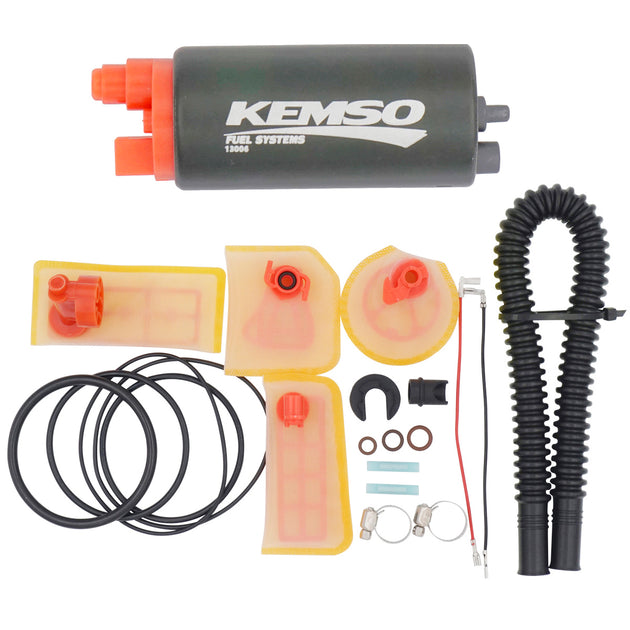 Safety regulations and cybersecurity requirements are becoming increasingly strict. The new regulation UN ECE R100 requires that the coolant pump must pass the IP6K9K dust and water resistance test, withstand the chemical erosion of ethylene glycol-based coolant (concentration 50%), and have a material life cycle of more than 15 years. The 2022 NHTSA mandatory recall incident (involving 48,442 Mach-E vehicles) disclosed that the insulation of the pump body windings of a certain supplier failed, resulting in a short-circuit probability as high as 1.2‰ and triggering high-voltage power-off protection. The current technical solutions, such as the dual-cycle Fuel Pump (model EKP-22) developed by Bosch, adopt silicon carbide power modules, reducing energy consumption from 180W to 105W, and achieve CAN FD bus encryption through the AutoSAR security architecture, improving the flow control accuracy to ±1%. The user must verify that the component complies with the ISO 6469-3 electrical safety standard and that the software signature key is compatible with the Ford FDRS system.
Long-term operation and maintenance data prove the value of preventive replacement. The precisely matched Fuel Pump can stabilize the median battery temperature at 42°C (inferior parts result in a standard deviation of 7.3°C), and reduce the battery degradation rate from 2.3%/ year to 1.6%/ year. The Ford Technical Bulletin TSB 23-2247 clearly states that when the working current of the pump body fluctuates by more than ±15% or the noise spectrum amplitude at 2000Hz is greater than 0.06g ²/Hz, it must be replaced to avoid the risk of system melting. Industry statistics show that for every one dollar of preventive investment, 8.2 dollars of high-voltage system maintenance costs can be avoided, ranking first in terms of benefit ratio among electric vehicle maintenance projects.
Safety regulations and cybersecurity requirements are becoming increasingly strict. The new regulation UN ECE R100 requires that the coolant pump must pass the IP6K9K dust and water resistance test, withstand the chemical erosion of ethylene glycol-based coolant (concentration 50%), and have a material life cycle of more than 15 years. The 2022 NHTSA mandatory recall incident (involving 48,442 Mach-E vehicles) disclosed that the insulation of the pump body windings of a certain supplier failed, resulting in a short-circuit probability as high as 1.2‰ and triggering high-voltage power-off protection. The current technical solutions, such as the dual-cycle Fuel Pump (model EKP-22) developed by Bosch, adopt silicon carbide power modules, reducing energy consumption from 180W to 105W, and achieve CAN FD bus encryption through the AutoSAR security architecture, improving the flow control accuracy to ±1%. The user must verify that the component complies with the ISO 6469-3 electrical safety standard and that the software signature key is compatible with the Ford FDRS system.
Long-term operation and maintenance data prove the value of preventive replacement. The precisely matched Fuel Pump can stabilize the median battery temperature at 42°C (inferior parts result in a standard deviation of 7.3°C), and reduce the battery degradation rate from 2.3%/ year to 1.6%/ year. The Ford Technical Bulletin TSB 23-2247 clearly states that when the working current of the pump body fluctuates by more than ±15% or the noise spectrum amplitude at 2000Hz is greater than 0.06g ²/Hz, it must be replaced to avoid the risk of system melting. Industry statistics show that for every one dollar of preventive investment, 8.2 dollars of high-voltage system maintenance costs can be avoided, ranking first in terms of benefit ratio among electric vehicle maintenance projects.
Safety regulations and cybersecurity requirements are becoming increasingly strict. The new regulation UN ECE R100 requires that the coolant pump must pass the IP6K9K dust and water resistance test, withstand the chemical erosion of ethylene glycol-based coolant (concentration 50%), and have a material life cycle of more than 15 years. The 2022 NHTSA mandatory recall incident (involving 48,442 Mach-E vehicles) disclosed that the insulation of the pump body windings of a certain supplier failed, resulting in a short-circuit probability as high as 1.2‰ and triggering high-voltage power-off protection. The current technical solutions, such as the dual-cycle Fuel Pump (model EKP-22) developed by Bosch, adopt silicon carbide power modules, reducing energy consumption from 180W to 105W, and achieve CAN FD bus encryption through the AutoSAR security architecture, improving the flow control accuracy to ±1%. The user must verify that the component complies with the ISO 6469-3 electrical safety standard and that the software signature key is compatible with the Ford FDRS system.
Long-term operation and maintenance data prove the value of preventive replacement. The precisely matched Fuel Pump can stabilize the median battery temperature at 42°C (inferior parts result in a standard deviation of 7.3°C), and reduce the battery degradation rate from 2.3%/ year to 1.6%/ year. The Ford Technical Bulletin TSB 23-2247 clearly states that when the working current of the pump body fluctuates by more than ±15% or the noise spectrum amplitude at 2000Hz is greater than 0.06g ²/Hz, it must be replaced to avoid the risk of system melting. Industry statistics show that for every one dollar of preventive investment, 8.2 dollars of high-voltage system maintenance costs can be avoided, ranking first in terms of benefit ratio among electric vehicle maintenance projects.