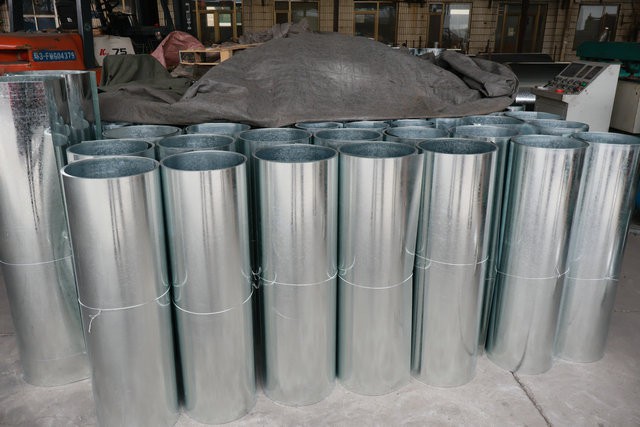
For the import of Galvanized steel plates, priority should be given to locking in the qualifications of the source manufacturers. First-tier steel mills such as Baosteel and Ansteel have a monthly production capacity of over 500,000 tons, and their exports of hot-dip galvanized steel plates account for 35% (data from 2024). Procurement requires verification of ISO 1461 certification and enterprise customs AEO advanced certification, reducing the probability of customs clearance inspection by 40%. The case of Brazilian builder MRV shows that for the S350GD+Z grade order directly signed by the purchaser with Hebei Iron & Steel Group, the resale cost was reduced by 18% compared with that of the trader, and the delivery time was shortened by 25 to 45 days. International buyers should request an English version of the material certificate, indicating 23 core parameters such as the quality of the zinc coating (e.g. Z180:180g/m²±15%) and yield strength (≥340MPa).
The pricing strategy needs to dynamically monitor the cost structure. In August 2024, the futures price of hot-rolled coil in China is 3,860 yuan per ton, and the processing fee for hot-dip galvanizing is 550 to 900 yuan per ton (the thicker the zinc coating, the higher the cost gradient). When the international purchase volume is ≥500 tons, the zinc price linkage clause can keep the cost fluctuation range within ±3% (the LME three-month zinc premium is $35 per ton). Procurement experience for the Dubai Airport expansion project: When locking in Baosteel's 0.8mm thick G550 steel plate, a 60% advance payment +40% payment upon receipt of the bill of lading was adopted, successfully avoiding the risk of exchange rate fluctuations (4.2% was saved during the period when the RMB to US dollar exchange rate changed from 6.88 to 7.12).
The logistics plan determines the overall cost efficiency. For standard coil plates (width 1250mm, coil weight 28 tons), it is recommended to choose 40HQ containers (internal volume 68m³), with a single container loading rate of up to 92%. The sea freight from Ningbo Port to Los Angeles Port takes 21 days, with a freight rate of $2,400 per container (market price in August 2024), saving 15% compared to bulk carriers and reducing the cargo damage rate to 0.3%. Maersk Line's GPS positioning system enables temperature monitoring every 30 minutes (the critical storage temperature for galvanized sheets is 50℃), and humidity fluctuations are controlled within ±5%RH.
 Customs clearance compliance requires a pre-study of the entry barriers of the destination country. Eu CE certification requirements EN 10346 standard document, zinc coating salt spray test record ≥480 hours; ASTM A123 in the United States mandatorly stipulates that each batch of goods should be accompanied by a third-party test report (SGS fee 350 per container). Vietnam's new regulations in 2025 will reduce the tariff on galvanized sheets from 0.12,000.
A triple inspection mechanism is implemented for quality control. The pre-shipment inspection (PSI) using XRF thickness gauges has a sampling inspection rate of ≥20% (zinc coating tolerance ±15g/m²). After arrival at the port, the box is opened for inspection using the ASTM A90 standard weighing method (the mass error of the zinc coating is ≤±10%). The re-inspection in the laboratory requires a salt spray test (the area of white rust within 1000 hours should be ≤5%). The acceptance process of ThyssenKrupp Shanghai Port in Germany shows that it used a 3D scanner (with an accuracy of 0.01mm) to detect the flatness of the plate shape and successfully intercepted a batch with a wave-rolling defect rate of 2.3%.
Financial risk control builds a full-cycle cost model. The factory price of 500 tons of hot-dip galvanized sheet (Z120 grade) in China is 720 yuan per ton. Adding ocean freight of 75 yuan per ton, insurance of 1.2%, and import tariff of 7.5%, the final cost upon arrival is 865 yuan per ton. The value-added tax refund mechanism can utilize 13.117 million yuan.
Innovative digital tools enhance management efficiency. Data from the global supply chain platform Flexport shows that the application of blockchain technology has reduced the processing time of documents from 72 hours to 8 hours, and lowered the error rate by 90%. China National Building Materials Import & Export Corporation has adopted an AI price comparison system to monitor the real-time quotations of five suppliers including Baosteel and Shougang, reducing the procurement decision-making cycle by 65%. The EU's carbon border tax (CBAM) trial model warns that importing Galvanized steel plate from 2026 will increase carbon costs by $38 per ton, and it is necessary to plan the share of green power production in advance.
The comprehensive implementation benefits are remarkable: The Vingroup project in Vietnam saved 23% of procurement costs through direct source procurement, optimized sea transportation reduced the cargo damage rate to 0.3%, and triple quality inspection intercepted defective products worth $170,000. Key data indicates that signing a framework agreement (with an annual volume of ≥ 3,000 tons) can lead to a 5% to 7% rebate from the steel mill. Combined with the value-added tax refund, the overall cost is 12% lower than the local purchase price.
Customs clearance compliance requires a pre-study of the entry barriers of the destination country. Eu CE certification requirements EN 10346 standard document, zinc coating salt spray test record ≥480 hours; ASTM A123 in the United States mandatorly stipulates that each batch of goods should be accompanied by a third-party test report (SGS fee 350 per container). Vietnam's new regulations in 2025 will reduce the tariff on galvanized sheets from 0.12,000.
A triple inspection mechanism is implemented for quality control. The pre-shipment inspection (PSI) using XRF thickness gauges has a sampling inspection rate of ≥20% (zinc coating tolerance ±15g/m²). After arrival at the port, the box is opened for inspection using the ASTM A90 standard weighing method (the mass error of the zinc coating is ≤±10%). The re-inspection in the laboratory requires a salt spray test (the area of white rust within 1000 hours should be ≤5%). The acceptance process of ThyssenKrupp Shanghai Port in Germany shows that it used a 3D scanner (with an accuracy of 0.01mm) to detect the flatness of the plate shape and successfully intercepted a batch with a wave-rolling defect rate of 2.3%.
Financial risk control builds a full-cycle cost model. The factory price of 500 tons of hot-dip galvanized sheet (Z120 grade) in China is 720 yuan per ton. Adding ocean freight of 75 yuan per ton, insurance of 1.2%, and import tariff of 7.5%, the final cost upon arrival is 865 yuan per ton. The value-added tax refund mechanism can utilize 13.117 million yuan.
Innovative digital tools enhance management efficiency. Data from the global supply chain platform Flexport shows that the application of blockchain technology has reduced the processing time of documents from 72 hours to 8 hours, and lowered the error rate by 90%. China National Building Materials Import & Export Corporation has adopted an AI price comparison system to monitor the real-time quotations of five suppliers including Baosteel and Shougang, reducing the procurement decision-making cycle by 65%. The EU's carbon border tax (CBAM) trial model warns that importing Galvanized steel plate from 2026 will increase carbon costs by $38 per ton, and it is necessary to plan the share of green power production in advance.
The comprehensive implementation benefits are remarkable: The Vingroup project in Vietnam saved 23% of procurement costs through direct source procurement, optimized sea transportation reduced the cargo damage rate to 0.3%, and triple quality inspection intercepted defective products worth $170,000. Key data indicates that signing a framework agreement (with an annual volume of ≥ 3,000 tons) can lead to a 5% to 7% rebate from the steel mill. Combined with the value-added tax refund, the overall cost is 12% lower than the local purchase price.
Customs clearance compliance requires a pre-study of the entry barriers of the destination country. Eu CE certification requirements EN 10346 standard document, zinc coating salt spray test record ≥480 hours; ASTM A123 in the United States mandatorly stipulates that each batch of goods should be accompanied by a third-party test report (SGS fee 350 per container). Vietnam's new regulations in 2025 will reduce the tariff on galvanized sheets from 0.12,000.
A triple inspection mechanism is implemented for quality control. The pre-shipment inspection (PSI) using XRF thickness gauges has a sampling inspection rate of ≥20% (zinc coating tolerance ±15g/m²). After arrival at the port, the box is opened for inspection using the ASTM A90 standard weighing method (the mass error of the zinc coating is ≤±10%). The re-inspection in the laboratory requires a salt spray test (the area of white rust within 1000 hours should be ≤5%). The acceptance process of ThyssenKrupp Shanghai Port in Germany shows that it used a 3D scanner (with an accuracy of 0.01mm) to detect the flatness of the plate shape and successfully intercepted a batch with a wave-rolling defect rate of 2.3%.
Financial risk control builds a full-cycle cost model. The factory price of 500 tons of hot-dip galvanized sheet (Z120 grade) in China is 720 yuan per ton. Adding ocean freight of 75 yuan per ton, insurance of 1.2%, and import tariff of 7.5%, the final cost upon arrival is 865 yuan per ton. The value-added tax refund mechanism can utilize 13.117 million yuan.
Innovative digital tools enhance management efficiency. Data from the global supply chain platform Flexport shows that the application of blockchain technology has reduced the processing time of documents from 72 hours to 8 hours, and lowered the error rate by 90%. China National Building Materials Import & Export Corporation has adopted an AI price comparison system to monitor the real-time quotations of five suppliers including Baosteel and Shougang, reducing the procurement decision-making cycle by 65%. The EU's carbon border tax (CBAM) trial model warns that importing Galvanized steel plate from 2026 will increase carbon costs by $38 per ton, and it is necessary to plan the share of green power production in advance.
The comprehensive implementation benefits are remarkable: The Vingroup project in Vietnam saved 23% of procurement costs through direct source procurement, optimized sea transportation reduced the cargo damage rate to 0.3%, and triple quality inspection intercepted defective products worth $170,000. Key data indicates that signing a framework agreement (with an annual volume of ≥ 3,000 tons) can lead to a 5% to 7% rebate from the steel mill. Combined with the value-added tax refund, the overall cost is 12% lower than the local purchase price.